Pumping, inspection, repair, and full installation across Mount Juliet and Wilson County. Written pricing before the work starts.
Call (555) 555-5555Or call — we answer. No obligation, honest advice.
The first thing to understand about septic in Mount Juliet is what is under the grass. Wilson County sits on shallow limestone, and near-surface rock changes almost everything about how a system gets installed and how long it lasts. Tank holes sometimes have to be cut through rock, drain fields are designed around thin soil that has less room to filter, and a company that treats this ground like ordinary dirt is going to be wrong about the parts that matter.
Mount Juliet has spent more than a decade as one of the fastest-growing suburbs east of Nashville, and the City Between the Lakes keeps stretching - north toward Old Hickory Lake, south past I-40, and out into rural Wilson County along Highways 70 and 109. Sewer reaches the dense new developments in the core. The acreage lots, the lake-adjacent homes, and most of everything past the edge of town run on septic, and a lot of those tanks now belong to families who moved here for space and inherited a system nobody ever explained to them.
The method is plain enough. Locate the tank, get the lids off, photograph what is actually happening inside, and put a number in writing before any work starts. Diagnosis, then price, then work, in that order. Some calls end with us telling you the system is healthy and to ring again in a few years.
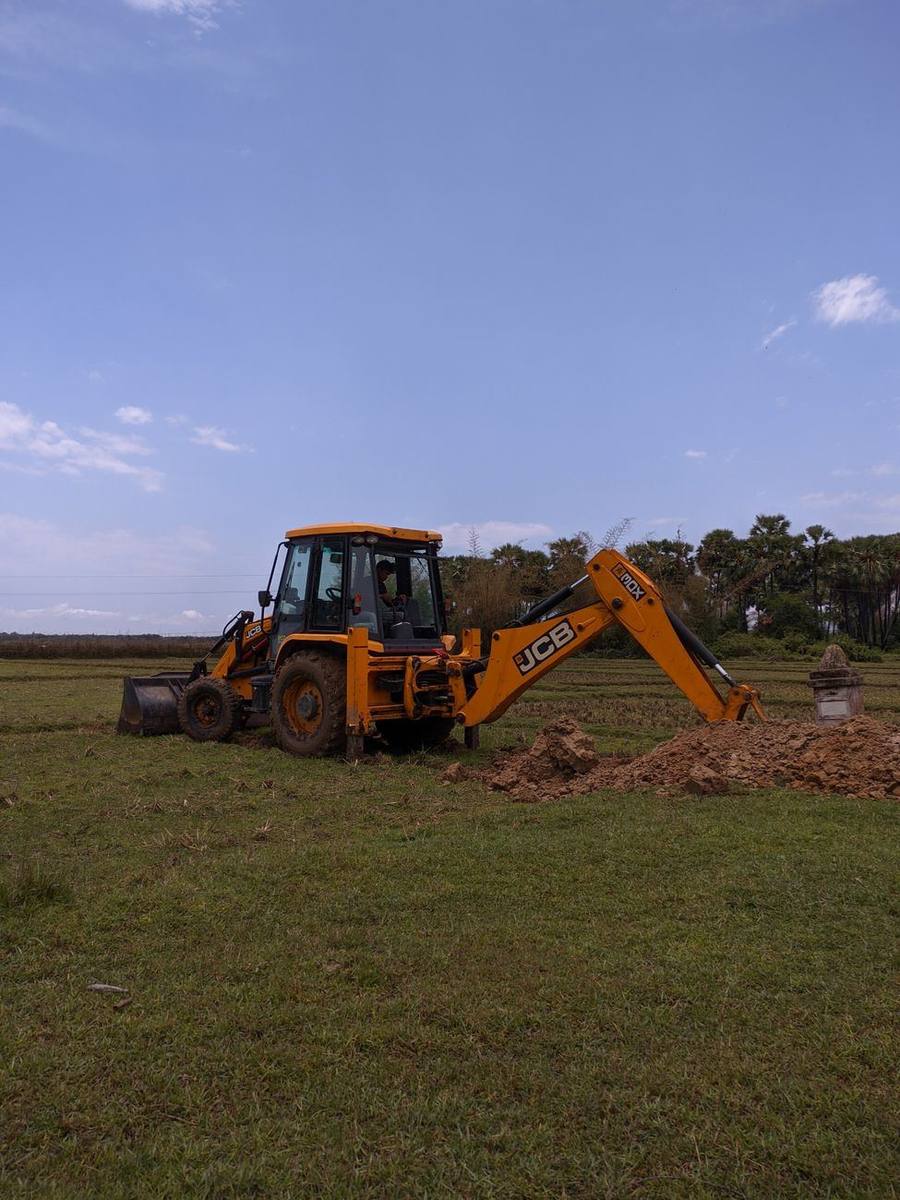
Most septic work is excavation, and on Wilson County ground that can mean meeting rock a foot or two down. Locating a tank, opening a lid, exposing a line, or setting a new field all start with breaking ground, and how that gets done decides what your yard looks like afterward.
Lids get seated properly, ground gets raked back, and no ruts get cut across the yard. The only evidence we were there should be a system that works the way it is supposed to.
Four services cover almost everything a residential system in Wilson County needs, whether you are on a subdivision lot near town or acreage out toward Gladeville.
Complete pump-outs on a three-to-five-year cycle. We uncover the lids, pump fully - sludge and scum, not just liquid - inspect the baffles, and hand you a written condition report every time.
Closing-ready reports for buyers and sellers. Tank and sludge levels, baffle and tee integrity, pump and alarm operation, and drain field surface, photographed and clear enough to negotiate with.
New builds and replacements, plus repairs to baffles, pumps, lines and fields. Soil evaluation and Wilson County Environmental Health permitting handled, including rock excavation where the ground demands it.
A tank sorts what reaches it into three layers. Fats and light debris float up into a scum mat. Denser solids settle into a sludge blanket on the floor. The clearer liquid caught between them is the only part supposed to continue out to the drain field. Once the sludge grows tall enough, solids escape with the liquid, and a field choked that way does not come back.
Wilson County's shallow limestone is the local wrinkle. Thin soil over rock gives a drain field less depth to filter through and less margin for error than deep ground would, so systems here have to be sized and scheduled with that in mind. It is also why lots with too little soil call for a pump or alternative system that a gravity field would not need, and why no honest company quotes an install before a soil and site evaluation.
The schedule falls out of the same reasoning. A small household on an adequately sized tank may reach five years; a full house belongs on three. Thin soil over limestone gives a field very little slack, so we set your interval from the sludge depth measured on the day rather than from a generic rule.

Failure here is slow-motion rather than sudden. What shows up as an emergency is usually a decade of skipped pumping arriving all at once. Keeping solids back is the tank's whole purpose, and when it runs out of room to do that, they move downstream into the trenches. No additive undoes it afterward.
So the rule worth remembering is this: pumping costs little, drain fields cost a great deal. Every pump-out is really money spent on the trenches you cannot easily replace - which counts double over Wilson County rock, where thin soil leaves fewer good places to build a replacement field.
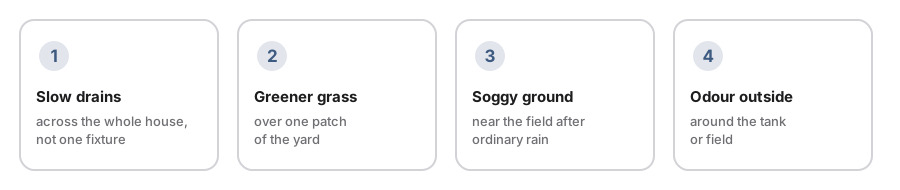
Trouble announces itself early if you know the tells. Drains across the whole house slowing or gurgling together. Grass over one strip growing greener than the rest of the yard. Ground above the field staying spongy after ordinary rain. An odor outdoors near the tank or trenches. None is an emergency alone; all are cheaper to investigate than to wait out.
A handful of routine habits quietly cost systems years. Flushed wipes, regardless of what the packaging promises. Heavy bleach or chemical drain cleaner, which kills the bacteria the tank runs on. Driving or parking over the field, which compacts thin soil and crushes lines. And downspouts or yard drains discharging toward the trenches, flooding a field sized only for what the house produces.
None of these mean disaster on their own. All of them are cheaper to look at than to ignore.
Every job runs the same way, whether it is a routine pump-out or a full installation. Here is the standard you can hold us to.
You get the number before work starts, not after. If we open the lid and find something else going on, we stop, show you, and quote it separately. No surprise line items at the end.
You get a real window and a text or call when the crew is on the way. If weather or rock forces a change, you hear from us first, not last.
Lids seated, ground raked back, no ruts across the yard. The only evidence we were there should be a system that works the way it is supposed to.
Septic can stall a closing faster than almost anything, and it is among the most commonly overlooked items in a Wilson County contract. Since a standard home inspection excludes the system altogether, a buyer can close on lake-adjacent property carrying a failing field and discover it the first heavy week of spring.
Book early enough in the option period to leave yourself somewhere to go. What gets examined matters as much as when: the tank opened and measured for sludge and scum, baffles and tees confirmed, flow tested with running water, and the trenches probed for saturation. Leave out the field and the expensive half of the system stays unexamined.
Sellers benefit most from doing this early. Pumping and inspecting before listing replaces an open question with documentation, which is worth more at the negotiating table than a reassurance. If a closing date is already set, say so on the call - scheduling works differently against a deadline.
Mount Juliet is the base, and the service area covers the surrounding Wilson County ground - north toward Old Hickory Lake, south past I-40, and out along Highways 70 and 109 into Gladeville, Green Hill, and the county roads where sewer never reached. The developments keep pushing outward as the area grows, but past the reach of the sewer lines this is still septic country.
Out toward the county edges, travel is built into the quote and mentioned on the phone rather than tacked onto the invoice later. If you sit just outside the communities listed below, it is still worth a call.

Septic permitting in Wilson County runs through the county environmental health office, and on this geology the paperwork leans harder on the soil and site evaluation than it does in places with deep ground. Where there is enough soil, a conventional gravity field works. Where the rock sits too close to the surface, the same lot needs a pump or an engineered alternative system instead, and which one you have is decided in the evaluation, not on install day.
For a homeowner that mostly means one less thing to worry about. You do not need to know how much soil sits over the rock on your lot, whether your field can run on gravity, or what the county wants to see on a replacement permit. You call, we evaluate the ground, and the permitting gets handled by people who work this rocky county routinely rather than once in a while.
Nobody should learn septic pricing during an emergency, so here is the calm-day version: pumping is the routine cost, repairs track components from cheap floats and baffles up to serious field work, and installation follows the soil - which in Wilson County can mean rock excavation and an engineered field. Whatever you need, call (555) 555-5555 and we will tell you what your system actually needs, including when the honest answer is nothing yet.
Save the number before you need it. Septic problems only get more expensive the longer they wait, and thin soil over rock is not forgiving of delay.
Tell us what you need and we'll get back to you with a real answer. If it's an active backup or standing water over the field, calling gets you a faster response.
Call: (555) 555-5555
Area: Mount Juliet, TN and Wilson County